

Years ago, I was very very stupid. As a symptom of my stupidity I used to collect jingles. Radio identification jingles.
Yes. I know.
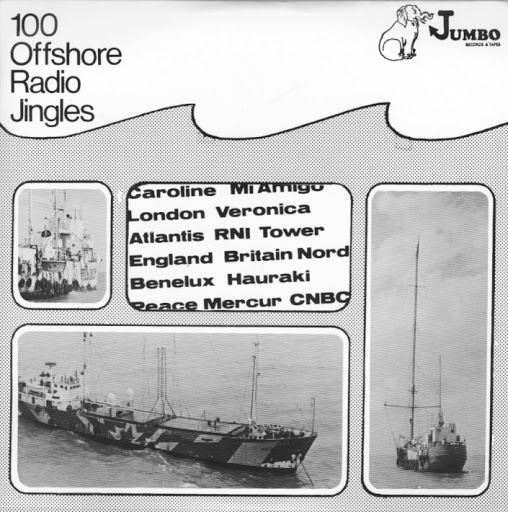
Whilst the average radio listener is completely unaware of such things as the station’s sonic logo, or whether or not a particular jingle is sung acapella, or is a sweeper, or a recording of somebody talking whilst sitting on the toilet being very very constipated, or is whatever latest ‘jinglo-ism’ the radio industry has invented, radio anoraks, on the other hand, know what’s what.
Yes, there is a science to the annoying irrelevant disjointed bits that go between the songs when two or more are played back to back, or between the adverts and the songs. Or is it actually a ‘science’?
I mean, there’s apparently a science in competency statements and job interviewing which doesn’t actually find out the ability to do a job but whether or not a bunch of candidates can build a house out of spaghetti.
As we all know, the huge organisations that are in chaos, such as parts of the NHS, and most local authorities, or, well, any civil service, all use the ‘science’ of doing stupid things instead of actually interviewing a candidate directly.
There’s a thriving ‘human resources’ industry that self-grows by buying into more and more of these ridiculous fads, which ends up creating a workforce full of people who actually haven’t got a clue when it comes to the task the organisation is there for, or the type of solutions that are needed. Hence why these big organisations overspend, are in chaos, and let humanity down.
So, when it comes to radio, there’s a pretend science that’s been grown around how a radio station sounds. As with the human resources scam I’ve just mentioned, this requires the company spend a fortune lining the pockets of those who convince them that certain ‘imaging’ is needed and only they can ever know and provide exactly what is wanted. Usually this is in return for a fat annual licensing fee as well as the initial payments.
The jingle providers will typically find a set of tunes or ‘logos’ that are in use on many other stations, and then have the station’s name re-sung on top. Kerching! Job done, money in the bank.
Radio anoraks prided themselves on collecting tapes as close to the original tapes as possible. That’s even easier now that mp3s and wavs abound. Radio anoraks will play these short pieces to themselves. Night after night. Over and over. To them these are the most important part of the radio station’s output.
I’ve mentioned before that radio anoraks put immense value on aspects that a listener has no care about. And of course, the things listeners actually care about are completely ignored by radio anoraks. Not deliberately, they are just ignorant of what really makes radio work for the listeners.
So, it was interesting to see much burbling and murmuring and touching of chins, nodding of heads, and trouser erections, when BBC Radio 2 unveiled its new set of jingles this week. Not only were they new, but they had a complete ‘science’ behind them. Oh yes they did. As the ‘science’ was shared, the burbling, mumuring, touching of chins, nodding of heads and trouser erectionss became far more excitable.
Remembering my roots as a radio and jingles anorak, I listened to the new Radio 2 livery. Hmmmm. Whatever. The new Radio 2 jingles just plod along like Radio 2 jingles always have.
Why is it that when one gets older, radio has to slow down the pace of its delivery? I mean, if you grew up on fast moving radio, with fast moving noisy choons and, of course, fast moving jingles, why, when you head over around 35ish, do you suddenly want everything running at such a slower pace? It seems that listeners want to hear the same songs over and over again to remind them of being younger, but they want all the bits around those same old songs to be slower and more gentle. Or, at least that’s what the ‘science’ of broadcasting at old people tells the industry. I wonder if the listeners agree.
Anyway. Well done BBC for no longer having to pay the annual licensing fee of the last twenty years, but otherwise, whatever, nothing to see here. A tiny few of the listeners will maybe notice there’s something different and will just carry on listening for the actual content of the programme alongside the majority. Only the radio anoraks will be listening carefully to see, or hear, how it all fits.

 England's England