

Once upon a time, many many moons ago, Liverpool had its own radio stations.
In 1967, the BBC, not wishing to provide one just for Liverpool, opted for the branding BBC Radio Merseyside and targeted all of the county of Merseyside and Halton in North Cheshire. Output wise, the station had and still has studios based in Liverpool, producing Liverpool-centric features. It opted for broadly local personalities presenting a very regional generic output, but Liverpool dominated.
Its local monopoly was broken in 1974 when it was joined by the then self-contained commercial local radio station Radio City. For many years the operation was a local one, with studios based in Liverpool, and music and presentation very locally biased. The administration of the radio station was local, as was the marketing and advertising department.
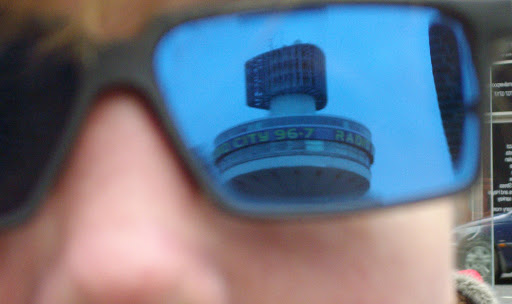 Eventually, as with all commercial radio stations, Radio City was forced to operate a separate service on AM to its main service on FM. The AM service eventually became Magic. Although ownership transferred to Borg-like assimilationists who go round hoovering up radio stations, and there were many departments shut down, the programming continued to be locally produced and presented in Liverpool.
In 2008 the company won the rights to broadcast a third radio station, an all speech all day output, they called CityTalk.
For a while Liverpool had five dedicated radio stations. In 1998 City and Merseyside had been joined by Crash FM which, after, well, crashing, got relaunched as Juice FM.
As is common across the entire commercial radio network, Liverpool slowly lost its individual radio services, and instead became the recipients of networked programming. I don’t mean for specialist shows like the Sunday afternoon top 40, but for major sections of the output.
At the same time as local programming started disappearing from CityTalk, so too did networking commence on Magic.
We arrived at the situation where the AM outlet, Magic, now has absolutely nothing produced locally. It is a generic oldies service with no Liverpool localness to it, well, apart from jingles that say Liverpool and commercials for Liverpool products. Editorially and musically there is nothing Liverpool centric.
The supposed speech station CityTalk now spends most of its time playing rockish oldies and repeating a pre-recorded 5 or 6 minute news and sport summary. It is ‘locally originating’, I suppose, since there’s not another station with the same licensed format that it could rebroadcast. This means the computer that burbles away with the output is dedicated to Liverpool. It’s also probably in Liverpool.
I say ‘probably’ because it would be perfectly plausible that it is in Manchester or controlled from Manchester.
The legacy service for Liverpool, Radio City, is now networked from Manchester for increasingly longer and longer hours each day, with generic programming. Again the localness is just the adverts and jingles. Even the presenters who are actually presenting the bits of the day that come from Liverpool rarely sound like locals. They sound like generic broadcasters. The music they play follows exactly the same playlist as can be heard on the Manchester equivalent of Radio City, so it’s not even flavoured for Liverpudlians.
The exception to this rule is the 5 nights a week late night Pete Price show. This is a particularly strange enigma that I’ve written about before. Whilst the entire output of Radio City is aimed at 20 to 30 somethings wanting to hear general pop and recent hits, the Pete Price show seems to appeal to much older generations you can’t imagine listen to Radio City at other times.
In other words, the localness of Radio City is now just down to a couple of hours at night, and that’s it. Where once the music was supplemented by strong local features, it is just music now, except on the Pete Price show.
BBC Merseyside, in keeping with all BBC local radio, aims its output at the extremely old listener. These are usually in their 70s and 80s, which is probably about 10 to 20 years older than the average Pete Price listener.
However, BBC Merseyside is now forced to take some networked programming making it less and less ‘local’ for large parts of its output. Thankfully, it’s still providing far more localness than the stations clustered as parts of Radio City.
From the Radio City perspective, it is extremely sad to see the legacy or heritage radio station die in the way it has. Liverpool deserves its own programming coming from and for Liverpool. Heck, we’ve got our very own TV station coming soon. But nearly all our radio stations have gone away.
Well, not all of course, because there’s Juice FM. For the moment at least, it doesn’t appear to be networking huge sections of its dayparts from anywhere else. But then, equally, all it is doing is playing near back to back songs, so there are none of the ‘local’ speech elements that used to define local radio as it did when Radio City was new.
Although Juice FM is owned by one of the Borg companies that hoover up radio stations, it retains a local flavour, even if sections are ‘voice-tracked’ (pre-recorded) and a computer is left to burble away during offpeak times. I like the playlist and imaging of Juice FM. I just long for the presenters to be allowed to interact with the songs and to show more personality. However, at least they do sound like they are locals.
It is this localness that helps keep building its audience and is making it the most listened to station in Liverpool. Granted, all it has to offer is very standard boringly presented dance oriented pop, but the presenters, when they are allowed to speak, have local accents. They talk about local places and local events. Juice FM retains an image to anybody listening, of a Liverpudlian radio station. An image long lost by Radio City.
Whether Juice FM will be forced down the networking and generic programming path of Radio City I guess only time will tell.
However, for now we have BBC Merseyside for the granddads and grandmamas, and Juice FM for the kids, both sounding Liverpudlian. It would sure be nice if Liverpool had its own radio stations for everybody else like it used to.

 England's England