

Commercial radio, licensed commercial radio, has just celebrated its 40th birthday. There have been many, notably only those who work, once worked, or wish they’d worked in the industry, trouser-shaking and going ‘waaaaa‘ about commercial radio having existed for over 40 years. Ordinary folk just don’t care, despite radio anoraks (new and old) assuming they must because radio is the centre of all consciousness.
Radio anoraks care about things like what ‘liners‘ and ‘drops‘ and ‘jingles‘ and commercials go where. They care about a presenter ‘crashing‘ the vocals of a song (talking at the same time as the singing has started) on the reducing number of radio stations where presenters are allowed to actually talk up to the point where the singing starts. Yep, because vocal crashing was such a sin, most ‘programme controllers’ of old banned talking up to the point where the singing starts. Instead, talking has to be done over a dedicated talking over bed of music, so the sin just couldn’t happen. Meanwhile, of course, the listeners didn’t even notice the original ‘sin‘. And, of course, the ‘sin‘ is an essential part of the amazingly popular pirate radio of today. But, hey, radio anoraks running the radio industry know best.
Well, my point there was that commercial radio being 40 years old is an anorak thing. What isn’t an anorak thing is the acceptance that radio is shrinking. It’s disappearing. Fast.
 The radio anoraks will have their meetings and seminars during which they’ll either award people for attempting new and interesting innovative presentation styles decades ago, despite ‘newness’ or trying out something different is now completely banned in favour of nothing but sameness and conformity, or they’ll discuss the ins and outs of radio presentation that will never be allowed as commercial radio shrinks. The few guys (and it’s usually men-guys) in charge will gladly take the platform and wax lyrical about their ‘brands‘ and ‘portfolios‘ and use whatever latest gobbledegook speak has been introduced into running ‘radio’ in order to fool those in the audience at these seminars that some kind of real ‘science’ is involved.
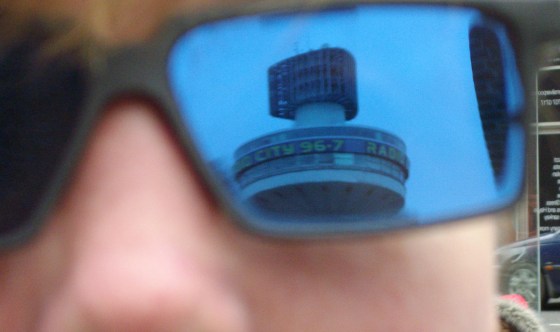
See, looking back, and I’m not going off on one about offshore radio here, but just focussing on commercial radio. As commercial radio in the 1970s and 1980s was licensed, each radio station was a self-contained ‘brand‘. Well, it was actually a self-contained radio station. When Radio City opened in Liverpool, it was a radio station with its own unique presenters, engineers, marketing and PR departments. It was autonomous. All commercial radio stations were. Each one was different and served a local area. Programming was designed to feed the needs of the listeners who lived or worked within the reception area. Although the differences were on occasions subtle, it was usually easy to tell Liverpool’s Radio City apart from Manchester’s Piccadilly Radio.
Ok, in truth a commercial radio station only really exists to deliver an audience to the advertisers, but this was done nicely, using the talent available that the local listeners could identify with. Early commercial radio built a listener loyalty, with adverts and programme being ‘accepted’ as one by the audience. In return, the audience gave longer listening hours, and the research figures of the day were good. The presenters were personalities in their own right, not previously schooled in TV or film, just the art of radio presentation.
There must have come a point, but I don’t know when it was, when commercial radio reached a crescendo.
This would have been a point at which all the commercial radio transmitters were broadcasting individual and dedicated programming from self-contained radio stations employing their own individual departments needed to run a self-contained radio service. It was the point when a maximum number of studios were in use to broadcast commercial radio to the UK.
When was this point?
From whenever this point was, the industry started shrinking. Carefully and calculatedly, stations got assimilated by other radio stations. Soon there were ‘radio groups’ and radio stations disappeared to be replaced by brands. Slowly, all actual localness disappeared. Everything shrunk and centralised. Well, everything except the advertising. This was definitely kept extremely ‘local’ by the one or two national sales houses now scoping all the national, regional and local marketing budgets they could from their one centralised, usually London, office.
With each bit of shrinkage at a local level, more and more people were ‘let go’. Presenters stopped having personalities and the computer told them what to say. Indeed, they’d have to record a dozen or so ‘local’ station identities to play out at the same time across a network of stations, er, ‘brands‘, where the original local ‘brands‘ were being maintained (for some reason). At night Radio City plays out a show that originates in Manchester and is played out across dozens of ‘different’ brands owned by Bauer across the north of England. When the presenter is actually allowed to speak, he does it after he plays a pre-recorded phrase of his voice saying something like “It’s Radio City..” “It’s Key 103..” “It’s insert branding name here..”, each personalised for the brand his same show is being broadcast on.
What remains of the Radio City studios, once alive and vibrant with 3 different live radio stations for Liverpool, spends most of its time with the lights off and empty.
Other shrinkage doesn’t bother to pretend it is different local radio stations any more. No pretence is used. Instead, it just carries the one single brand, like Heart or Capital or Magic or Smooth, and it never comes from the local areas it once did, just a single centralised studio, probably in London.
Again, as each ‘localness’ contraction occurs, so too do more people lose their jobs. What radio presenters there are left to make those 4 or 5 announcements an hour are now all ex-TV personalities, ex-boy (or girl) band members, ex-reality show participants, ex-people who we don’t know from or because of ‘radio‘. The only radio presenters still on the air who came from the old school of radio presenting, with faces for radio and absolutely no TV presence or singing credentials, are the ones who have been in radio forever like Simon Bates. When he dies his replacement will probably be somebody who once won X Factor. The strategy seems to be that it doesn’t matter how they sound on the radio, as long as people have heard of them from some other field. Just being a radio presenter is no longer good enough.
So, here we are in the week when commercial radio reaches 40. Audiences continue to shrink. The ‘output‘ has stagnated with no creativity, no hook, no specialness, no localness, no single thing to rave and chuckle about or talk about at school or work. Local commercial radio has largely disappeared to be replaced by faceless centralised jukeboxes with the voices of people who used to be famous speaking their fixed disjointed phrases when the computer says to, and sitting back twiddling their thumbs or playing on their phones until the computer tells them it’s time to speak again.
Apparently all this progress over the last 40 years is something we radio anoraks should be very proud of.

 England's England
Nice piece James and hits many nails squarely.
I think Radio generally (most especially music radio) lost its way a very long time ago. The only stations I listen to now are Radio 4 and 6 Music. Both of those do what they say on the tin – as per my Kenny Everett related rant here http://www.amazon.co.uk/review/RSZVZJ9A44T7K/ref=cm_cr_pr_viewpnt#RSZVZJ9A44T7K
At its best music radio is a slick, fast and seamless presentation medium for great music. That has to include truncating tracks to maintain pace, talk-ups, jingles and shotguns that bridge musical moods and the minimum of chat.
My ideal station would be one where the presenters were instructed that there should always be a track playing and that any talk must be over fade-outs or intros (i.e. talk element is very short). They do still have stations like this in the US and they are good. Virgin Radio was a little like that, but of course ….
I don’t believe that broadcast music radio has had its day, but it needs to ditch the endless chat breaks and “interesting” guests and just play the god-dam music.
LikeLike