

The idea that BBC local radio might cease to do much more than relay Radio 5Live has been conveniently leaked into the world of muttering and chattering.
A bit like when talk is of shutting libraries that nobody uses, suddenly there is uproar. Apparently, we are supposed to keep libraries open even though nobody visits them any more, and we are supposed to keep local (well, regional) BBC Radio stations open even though nobody listens to them any more.
I’m not quite sure what the point of BBC local radio actually is anyway. Its output always seems confused, safe, and uneventful, as well as probably only of interest to those over the age of 80. Not that there’s anything wrong with radio stations being targeted at the over 80s, but should this be a cost borne by the BBC in return for no audience, when a local radio station could be more things to more people?
 |
| Is this really just an old folks’ rest home? |
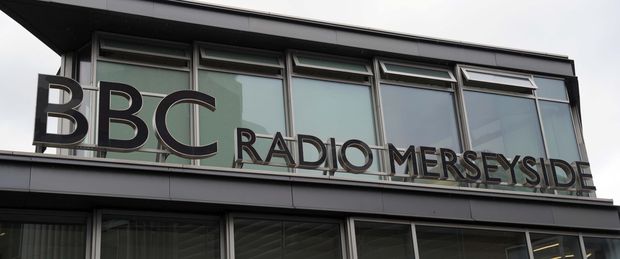
When I first moved to Liverpool, the first thing I noticed was the complete lack of radio stations (Not that I’m a radio anorak or anything) and tuning in to those that existed was like taking a step back to the 1970s. I can hear a number of BBC Local Radio stations, including those for Lancashire, Manchester, and of course the one for me, BBC Merseyside.
The standard daytime format will typically be long drawn out tedious talking bits, broken up by old music so bland that it wouldn’t even appear on Smooth’s playlist. The talking bits are on the most uninteresting subjects, and dominated by promotions for the obscenely richly funded arts and culture industry (Why oh why weren’t they affected by recent cut-backs? Hmmm. Hospital operating theatre -versus- a theatre group that specialises in African mime. I know which deserves the funding!). The vast majority, in fact, probably all, of the arts and culture industry is so out of touch with the ordinary Scouser that it is only the wealthy middle classes (from outside of Liverpool) that bother to attend any of these highly over-funded events. And yet, publicity for them dominates BBC Merseyside.
BBC Merseyside’s presenters have all been on the station (formerly BBC Radio Liverpool) since the First World War, and their pre-historic attitudes and denture whistles compete to find the cure for insomnia. Who IS listening to BBC Merseyside? Well, apparently, just a few of the same people who were listening decades ago and so have grown old along with its very old presenters.
At night of course, as with most BBC local stations, BBC Merseyside is host to programming aimed at minority interest listening. Yes, I suppose an hour for lovers of Bavarian nose-flute music is important, as is an hour for “ethnics”. Hey, that makes the station so damn ‘right on’. But, nobody’s listening! Why spend all that money producing ‘right on’ stuff nobody wants to bother to tune in for? Surely it makes far much more sense during ‘off-peak times’ to re-broadcast Radio 5Live, a station so wrongly starved of an FM outlet, and save the small fortune being spent on producing local programming that nobody knows is there.
My masterplan for BBC Local Radio, assuming it cannot be modernised to appeal to people under 80, would be to fund ‘local’ breakfast and drive-time talking only shows (no pointless bland songs needed!), plus maybe ‘opt in’ newscasts at certain other times junctioning with Radio 5Live. So, just as at the end of the BBC1 TV news the nice newscaster says, “And now it’s time to join the news teams where you are,” which allows the network to cut away to regional news for each transmission region, so too could the person on 5Live. Then on comes a local news sequence, rejoining 5Live at a point when the main programme starts.
I’d also fund local sports commentaries and special regional events that needed extended ‘local’ output, but definitely all the tedious and pointless general all-purpose generic daytime rubbish needs to be axed straight away.
Unfortunately, the moaners and complainers who force us to keep funding pointless libraries that nobody uses will no doubt start the same types of campaigns to save ‘local’ programming on BBC Local Radio.

 England's England
Another, cogent, well argued, wind up Chris. I did enjoy reading this although I disagree completely with almost every point.
Commercial radio has no interest in serving local communities. They used to be required to do this, and it resulted in locally made (and locally aimed( programming which did reflect the area it served. Now only the BBC is left, as usual, to fill the gap. SOomething they do rather well on Radio Scotland (my “Local” BBC station) Thanks to the net I am now able to listen to the “specialist” music shows on various BBC locals – excellent, by and large, and again filling a gap which Commercial radio fails to fill. I think we should expand BBC local radio – there are plenty of frequencies all carrying essentially the same Heart/Capital etc
LikeLike
While you're entitled to your view, can we nail the idea – according to RAJAR at least -that “nobody's listening” or that they're all over 80?
BBC Local Radio in England has a reach of 8 million (compared to 9 million each in England for R1 and 4) and a greater share than R1, R3, Five Live, Heart & Smooth.
And among 45-64s (NB – not over 80s!) share and reach both beat R1, 3, 5, Heart & Smooth. Even among 25-54s there are three million weekly listeners (as many as R5 and in the same ball park as R4).
The audience has grown in every one of about the last 6 quarters as the commercial sector gets out of local.
Oh.. and on the point about serving that audience just at breakfast and drive.. the daytime (9am-4pm) accounts for 45 per cent of listening hours.
LikeLike